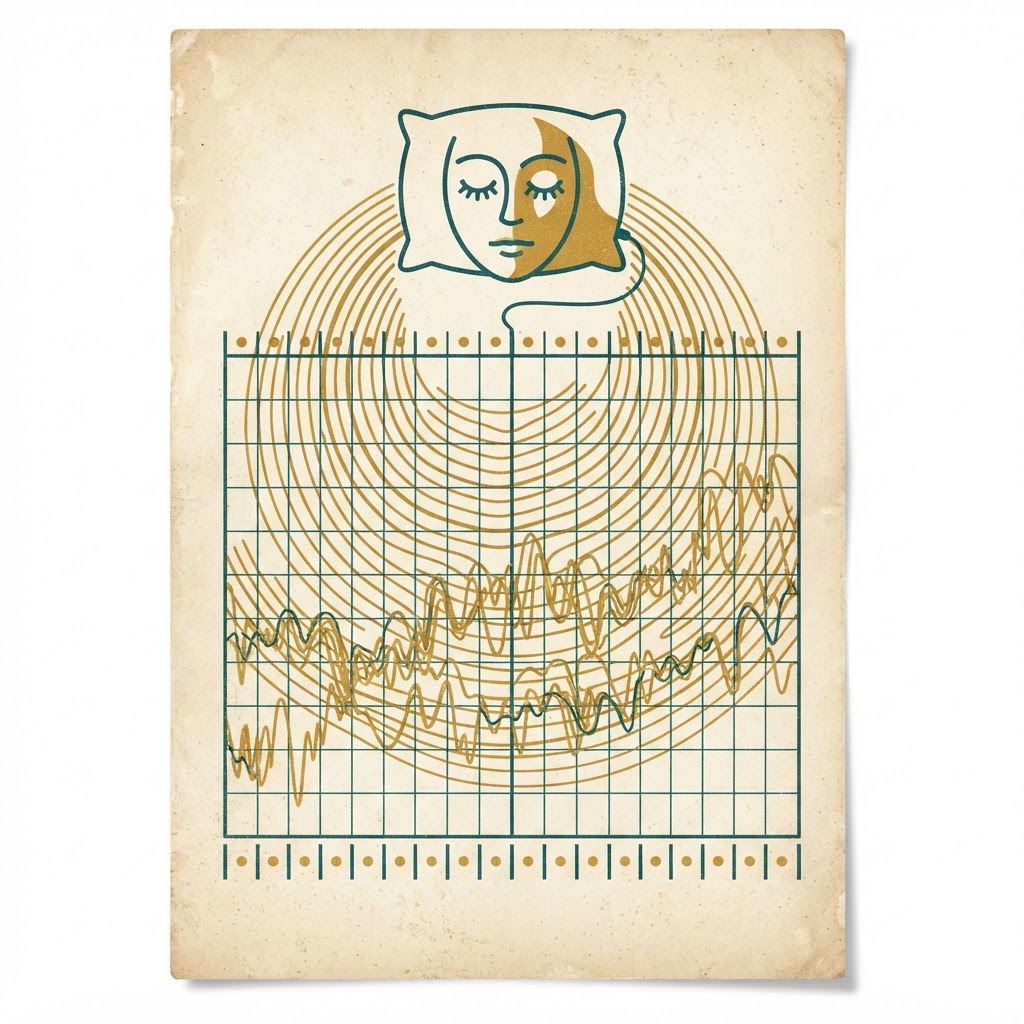
You spend roughly two hours of every night inside a strange state: your eyes dart beneath closed lids, your breathing quickens, your brain burns almost as much energy as it does while you are awake — and yet your body is paralyzed from the neck down. This is REM sleep, the stage where nearly all of the dreams you remember take place, and it is one of the most intensively studied phenomena in sleep science.

How psychology explains REM dreaming
When Freud wrote that dreams are the royal road to the unconscious, he treated the dream as a disguised fulfillment of a repressed wish, with dream imagery as censored content that slips past the inner censor. Jung widened the lens: for him, dreams were compensatory, balancing the conscious attitude with neglected material, and their symbols drew on archetypes shared across humanity — the shadow, the anima, the wise old man.
Modern psychology keeps the curiosity but drops the certainties. The continuity hypothesis observes that dream content largely mirrors waking concerns: what occupies you by day reappears, transformed, by night. Threat-simulation theory proposes that the negative turn so many dreams take is an evolutionary rehearsal of dangers. Emotional-processing models treat REM dreaming as a form of overnight therapy — a low-stakes environment where the brain reprocesses difficult experiences while the stress chemistry is dialed down. These frameworks do not agree on every point, but together they explain why dream research keeps returning to REM as the stage where the mind’s private work gets done.
5 fascinating facts about REM sleep
1. Most mammals and even birds show REM sleep. From house cats to duck-billed platypuses, the stage appears across the animal kingdom, and studies of sleeping rats have recorded the same place-cell patterns during REM that the animals used while running a maze earlier — a replay of the day’s route.
2. You are paralyzed while you dream. REM atonia locks the voluntary muscles as a protective reflex. People woken mid-REM sometimes experience the paralysis lingering briefly — a state researchers link to the experience of being unable to move while half-awake.
3. Lucid dreams happen almost exclusively in REM. Studies using eye-signal codes have confirmed that trained lucid dreamers, aware they are dreaming, can signal with pre-agreed eye movements while their brains show REM activity.

4. Your first REM period may be only ten minutes. But by the last cycle, REM can run close to an hour, which is why alarm clocks at dawn interrupt long, narrative dreams — and why those are the ones you remember.
5. Alcohol suppresses REM — and the brain takes it back. Drinking before bed shortens early REM periods, and sleep research describes a REM rebound on the following night, with more intense, longer REM as the brain compensates.
Practical tips for tonight
Because REM concentrates in the later cycles, the cheapest way to get more of it is simply to sleep enough — cutting the night short trims REM first. Keep a fairly consistent schedule, since irregular timing fragments the architecture of the night. If you want to catch more of your dreams, put a notebook or a notes app within arm’s reach and write down whatever fragment you wake with before doing anything else; dream recall fades within minutes of waking, and dream journaling has been part of both clinical dream research and practical dream work for a century. Finally, a cool, dark room helps the night run smoothly; comfort matters more than any gadget.
None of this is medical advice — if you suspect a genuine sleep problem, a specialist is the right stop. But for the ordinary sleeper, understanding REM turns the night from a blank into a story: two hours of vivid, chemically distinct brain work, quietly keeping your memories and emotions in order while you rest.
This content is for psychological and cultural perspective only and is not a substitute for medical diagnosis or professional consultation.